301 N Locust St, Denton, TX Mon-Sun: 7:00 am – 7:00 pm
Licensed & Insured

Siding Contractor in Denton, TX Built for Hail, Heat & Clay Soil

Siding in Denton has a hard job. Spring hail from March through June can crack vinyl and chip fiber cement in one afternoon. Then come the 100°F summer days that warp cheap panels on west-facing walls. Underneath all of it, expansive clay soil keeps shifting the house and opening gaps at corners and butt joints. Denton Siding Pros is a bonded and insured local siding contractor. We repair, replace, and install exterior cladding with all of that in mind. That means the right material, the right flashing details, and installs that leave room for the movement North Texas homes go through.

We work on everything from 1920s wood lap near the Courthouse Square and the Oak-Hickory Historic District to failing 1990s hardboard in Corinth and Highland Village and builder-grade Hardie gables in Flower Mound's Wellington and Argyle's Harvest. Each of those homes fails in its own way, and each city has its own permit rules and HOA approval steps. Because we work inside a 20-mile radius of Denton, we know the local codes and what the inspectors look for.

  • Bonded siding contractor
  • Fully insured crews and projects
  • Financing available for qualified homeowners

Request Your Free Estimate

No obligation. Fast, honest quotes.

Your information is never shared.

Online Estimates
Onsite Service
Licensed & Insured
Customer Rated
Local Expertise

Why Denton Homes Need a Siding Contractor Who Knows North Texas

Siding that does fine in milder places tends to fail early in Denton County. You get Hail Alley storms, triple-digit heat, wind-driven rain, and clay that shrinks and swells under the foundation, all in the same year. Here's what your exterior is dealing with and why it changes how siding should go on.

Hail, Heat, and Wind-Driven Rain

Denton sits right in Hail Alley. The severe hail season runs about March through June, and stones 1 to 2 inches across or bigger fall often enough here to puncture vinyl, dent metal, and fracture fiber cement edges. Summer highs stay in the mid-to-upper 90s from June through September, and many years bring a stretch of 100°F+ days. That heat softens low-grade vinyl until it buckles or oil-cans, and it's worse where low-E windows next door bounce sunlight onto the wall. Annual rainfall is in the upper 30s (inches), but it tends to come in hard bursts with spring and fall thunderstorms, so flashing, J-channel, and the weather-resistive barrier have to stop rain that's blowing sideways. Add straight-line winds, the occasional tornado, and freezes like February 2021 that leave vinyl brittle, and you can see why material choice and install details matter so much here.

Clay Soil and a Mixed Housing Stock

Denton County sits on expansive clay. East of I-35 it's Blackland Prairie, and to the west it's clay over Cross Timbers sands. That clay swells when it's wet and shrinks during drought, so foundations move, and the siding shows it: gaps at corners, buckled courses, cracked butt joints. The houses themselves span more than a century. Near UNT, TWU, and the Square you'll find early-1900s homes with wood lap and shiplap, often buried under aluminum or vinyl. Ranches from the 1950s to '70s may have asbestos-cement shingles on the gables. Homes from the 1980s and '90s in Lewisville, Corinth, and Lake Dallas often have hardboard that's swelling and rotting. And post-2000 subdivisions in Frisco, Little Elm, and Aubrey pair brick fronts with fiber cement that a lot of the time wasn't sealed or flashed correctly.

Permits, Historic Review, HOAs, and Masonry Rules

The City of Denton generally requires a building permit to re-side a house. Flower Mound, Lewisville, Frisco, Highland Village, Corinth, and Little Elm regulate exterior work too, each with its own thresholds. Unincorporated county areas usually have fewer requirements. Most cities here use the International Residential Code with local amendments, and those amendments affect barrier, flashing, and clearance details. In the Oak-Hickory area and around the Square, exterior changes may need Historic Landmark Commission or staff review, and swapping original wood for vinyl may be discouraged or restricted. Masonry ordinances in Frisco and Flower Mound limit how much of a wall siding can cover. HOAs in Lantana, Phillips Creek Ranch, Union Park, and Savannah usually want to approve colors and profiles before work starts. Homes built before 1978 trigger EPA lead-safe practices, and old asbestos-cement siding brings in federal and Texas asbestos rules.

A Fast-Growing, Value-Conscious Market

Denton is a college city of roughly 150,000+ people, and Denton County is one of the fastest-growing counties in the country. Landlords near campus want siding that's affordable and low-maintenance. Families in Flower Mound, Highland Village, Argyle, and Roanoke tend to go for premium fiber cement and design-forward colors to protect high home values. First-time buyers in Little Elm, Aubrey, and Krum are dealing with builder-grade siding as their builder warranties run out. Owners selling in a hot market want curb appeal before they list. And after every big storm, out-of-state storm chasers show up, which is why so many homeowners prefer an established local contractor.

Know The Signs

Common Siding Problems We See Across Denton County

Most siding failures around here trace back to a handful of local causes: hail, heat, clay soil, irrigation, and installs that were done too fast. Knowing why a problem happens is the first step to fixing it for good instead of patching it every spring. These are the problems we see most often, roughly from most to least urgent.

Hail and Wind Storm Damage

Emergency

Impact damage from hailstones and wind-blown debris: cracked or punctured vinyl, chipped and fractured fiber cement edges, dented metal trim, and panels torn off entirely by straight-line winds. Once the outer cladding is open, wind-driven rain can get to the sheathing within days.

Why it happens here

Denton County is in the middle of Hail Alley, and from March through June 1- to 2-inch stones are a real yearly possibility, not a rare event. Spring storms often come with straight-line winds, and North Texas sits on the southern edge of Tornado Alley. Production subdivisions repeat the same floor plans and builder-grade materials, so one storm cell can damage whole streets at once. That leads to big contractor backlogs and a wave of out-of-state storm chasers who may not be around when warranty problems show up.

Signs to watch for
  • Round cracks, holes, or spidering on vinyl panels
  • Chipped corners or exposed core on fiber cement
  • Dents in aluminum trim, gutters, or downspouts
  • Missing panels or trim pieces after high winds
  • Spatter marks on painted surfaces
  • Damage concentrated on one or two elevations facing the storm
Local patterns

Storm damage tends to cluster by neighborhood. We often see it street by street in Union Park, Savannah, Phillips Creek Ranch, and north Denton subdivisions after a single cell. Older vinyl on 1990s homes in Lake Dallas and Corinth is especially brittle and cracks more easily.

Our fix

We document every damaged elevation with photos and measurements, secure any openings, and then repair or replace. If matching discontinued colors isn't possible, we make the case for replacing the full elevation.

Failing Hardboard / Pressed-Wood Siding

Serious

Masonite and LP Inner-Seal-type siding made from compressed wood fibers and resin. As the paint seal fails, moisture gets in, and the boards swell, delaminate, grow fungus, and eventually rot, starting at the bottom edges, drip lines, and butt joints.

Why it happens here

Thousands of homes built across Lewisville, Flower Mound, Highland Village, Corinth, and Lake Dallas in the 1980s and '90s used hardboard. It's now 30 to 40 years old and at the end of its life. North Texas humidity, intense sun that breaks down the paint, and lawn sprinklers soaking the lowest courses every summer morning speed the decline up. Subterranean termites, and Formosan termites in parts of the region, also go after wood-based siding near the ground. Repainting buys a little time, but swollen hardboard can't be sealed again.

Signs to watch for
  • Swollen, mushroomed lower edges on boards
  • Soft spots that give when pressed
  • Flaking or blistering paint that keeps coming back
  • Waffle-pattern texture showing through paint
  • Visible fungus, mold, or dark staining
  • Termite mud tubes near the foundation line
Local patterns

This is everywhere in Old Town Lewisville, Corinth and Lake Sharon, Highland Village Lakeside, older Wellington sections, and Lakewood Village. It's usually worst on north-facing walls and wherever sprinkler heads hit the house.

Our fix

For isolated boards, a spot replacement can work. When failure is widespread, the long-term fix is a full tear-off and re-side in fiber cement, James Hardie, or quality vinyl, with a new weather-resistive barrier.

Foundation-Movement Siding Damage

Serious

Siding distortion caused by the house itself moving: gaps opening at outside corners, cracked fiber cement butt joints, buckled courses, trim pulling away from windows, and stair-step separations. It's often misread as a bad install or simple age.

Why it happens here

Denton County's expansive clay swells after heavy rain and shrinks hard during drought summers. That seasonal movement twists the wall framing. Fiber cement doesn't flex, so its joints crack, and vinyl that was nailed too tight can't slide and ends up buckling. If the movement isn't recognized, a homeowner can pay for siding repairs that fail again within a season. Installs here need to allow for movement and use the correct fastening and joint details.

Signs to watch for
  • Gaps widening at outside or inside corners
  • Diagonal cracks in fiber cement near windows
  • Wavy or buckled horizontal courses
  • Caulk joints torn open at trim
  • Doors or windows sticking on the same wall
  • Brick mortar cracks continuing into siding
Local patterns

It's most common on Blackland Prairie clay east of I-35 in Denton, Aubrey, and Little Elm, and on 1970s–90s slabs in Lewisville and Corinth after drought years like the long dry summers North Texas sees regularly.

Our fix

We figure out whether the cause is movement or the install, and recommend a foundation evaluation when needed. Then we repair with properly gapped joints and floating fasteners that can handle seasonal shifting.

Builder-Grade Fiber Cement Install Defects

Serious

Construction shortcuts on newer homes: missing kick-out flashing where roofs meet walls, no clearance above roofs, patios, and grade, factory-cut edges left unsealed, and butt joints with only caulk and no flashing behind them. Water gets behind the boards out of sight.

Why it happens here

Since 2000, master-planned communities have gone up quickly, and speed has often won out over detail. Brick-front homes with Hardie on upper gables, dormers, and chimney chases have lots of roof-to-wall intersections where kick-out flashing matters most. Wind-driven spring rain then finds every gap. Many of these homes are aging out of builder warranty right now, and owners find swollen board ends or rotted sheathing only after the coverage has ended.

Signs to watch for
  • Swollen or darkened board ends near rooflines
  • Water stains on interior walls below gables
  • Siding touching shingles or patio slabs
  • Failed or shrinking caulk at butt joints
  • Peeling paint on unsealed cut edges
  • Rotted trim at chimney chases
Local patterns

We regularly find these in Lantana, Harvest, Phillips Creek Ranch, Castle Hills, Robson Ranch, and Denton Southridge, especially on second-story walls and chimney chases that you can't see from the ground.

Our fix

We open up suspect areas, replace damaged sheathing and boards, add kick-out and joint flashing, restore proper clearances, and seal and paint all cut edges.

Heat Warping and Fading Vinyl

Moderate

Thin or builder-grade vinyl that softens in extreme heat and bows, ripples, or oil-cans between fasteners. Long UV exposure also makes the color chalk and fade unevenly, especially with darker shades.

Why it happens here

Denton's highs sit in the mid-to-upper 90s for four months, and many summers include runs of 100°F+ days. West- and south-facing walls get the worst of it. Reflective low-E windows on the house next door can focus sunlight hot enough to distort vinyl, a problem that's become common as subdivisions pack homes closer together. Panels nailed tight with no room to expand make it worse. North Texas sun also fades dark colors far faster than in northern climates.

Signs to watch for
  • Wavy or rippled panels on sun-facing walls
  • Localized melt or distortion spots
  • Panels popping out of J-channel
  • Chalky residue when you rub the surface
  • Noticeably faded elevations versus shaded ones
Local patterns

It shows up in tightly spaced newer neighborhoods in Little Elm, Aubrey, and north Denton where neighbors' windows reflect onto side walls, and on rental properties near UNT and TWU sided with budget-grade panels.

Our fix

We replace distorted panels with heavier, heat-resistant vinyl or fiber cement, recommend colors that hold up to sun, and fasten correctly so the siding can expand.

Rotted Wood Trim, Fascia, and Historic Lap Siding

Minor

Decay in wood fascia, soffit, corner boards, window trim, and original wood lap or drop siding, usually starting as small soft spots where paint has failed. It's minor if caught early, but left alone it spreads into framing.

Why it happens here

Wood trim is a common rot point throughout the region. North Texas sun breaks down paint, spring storms soak exposed end grain, and gutters that overflow during downpours keep fascia wet. On historic homes near the Square, original wood siding may be 100 years old. Covering it with vinyl decades ago often trapped moisture underneath. Historic district rules mean the fix usually has to be matching wood, not a substitute.

Signs to watch for
  • Soft or crumbling fascia boards
  • Peeling paint on window trim
  • Gaps where corner boards meet siding
  • Woodpecker or insect holes
  • Staining under gutter lines
Local patterns

It's concentrated in the Oak-Hickory Historic District, downtown Denton bungalows and Victorians, and around TWU and UNT, plus 1950s–70s ranches with wood gable siding throughout Denton and Lewisville.

Our fix

We replace rotted sections with profile-matched wood or durable trim materials, prime all sides, and seal joints. On historic properties, we follow the review requirements.

What We Do

Siding Services for Every Denton-Area Home

We don't push one product on every house. A 1925 bungalow near the Square, a 1994 hardboard two-story in Highland Village, and a new Hardie-and-brick home in Frisco need different solutions. Each service below is set up for the hail, heat, clay soil, and code requirements of North Texas.

Siding Repair

We fix cracked, punctured, loose, rotted, or storm-damaged sections without replacing the whole wall. That includes hail-split vinyl, chipped fiber cement, swollen hardboard boards, and torn trim, so small problems don't become structural water damage.

Our approach

We find the moisture source first. Then we remove the damaged pieces, check the sheathing and barrier underneath, replace in-kind or with the closest available match, flash joints properly, and seal and paint cut edges.

In Denton, TX

After spring hail, most of our repair calls come from neighborhoods like Union Park and Southridge. We also handle sprinkler-rot repairs on lower courses in Corinth and Lewisville, and gap repairs from clay-soil movement throughout the county.

Best for

Homeowners with localized damage on otherwise healthy siding, recent storm damage on one elevation, or isolated rotted boards on hardboard or wood exteriors.

Siding Installation

Complete siding installation for new additions, garages, shops, and homes being re-clad, built from the sheathing out with the correct weather-resistive barrier, flashing, trim, and clearances for North Texas weather.

Our approach

We install the barrier and flashing to the IRC as amended locally, add kick-out flashing at every roof-wall intersection, keep the required clearances above grade and roofs, and fasten so the siding can handle heat expansion and soil movement.

In Denton, TX

Every city in our area has its own permit thresholds, and HOAs in Lantana, Harvest, and Phillips Creek Ranch require approvals. We coordinate those so your project doesn't sit waiting.

Best for

Additions, detached garages, workshops, and homeowners who want the job done right from the framing out.

Specialty

Siding Replacement

Full tear-off and re-side for homes with failing hardboard, worn-out vinyl, or storm damage too widespread to patch. We remove the old material, fix the hidden damage behind it, and install a better system.

Our approach

Tear-off down to the sheathing, rot and termite inspection, sheathing replacement where needed, a new barrier and flashing, and then installation of your chosen material. We follow lead-safe practices on pre-1978 homes and flag suspected asbestos-cement for proper handling.

In Denton, TX

This is the go-to fix for the 1980s–90s Masonite and LP homes across Lewisville, Flower Mound, Highland Village, Corinth, and Lake Dallas. It's also the answer when hail damages discontinued siding that can't be matched.

Best for

Homes with widespread hardboard swelling, repeated paint failure, hail damage across multiple elevations, or owners getting ready to list.

Siding Inspection

A detailed exterior evaluation covering hail damage, moisture intrusion, install defects, rot, and foundation-related distortion, with photos and plain-language findings you can use for insurance, a purchase decision, or planning.

Our approach

Elevation-by-elevation photo documentation, moisture probing at suspect areas, checks of flashing and clearances, and a review of joints and corners for signs of soil movement, followed by a written summary of priorities.

In Denton, TX

It's especially useful after spring hail, before a builder warranty expires in newer subdivisions, before listing in a hot Denton County market, or when buying an older home near UNT or in Old Town Lewisville.

Best for

Storm-hit homeowners, buyers and sellers, owners nearing the end of a builder warranty, and landlords managing several properties.

Siding Maintenance

Ongoing care that keeps siding working: re-caulking failed joints, sealing cut edges, replacing a few damaged boards, adjusting irrigation-damage areas, and touching up trim before small issues turn into rot.

Our approach

Seasonal walk-arounds, removing failed caulk and applying high-performance sealant, spot repairs, checking clearances, and recommending sprinkler adjustments where water hits the walls.

In Denton, TX

North Texas sun breaks caulk down fast, and the hail season adds new damage every year. A check in late spring, after hail, and in fall, before freezes, keeps Hardie-and-brick homes in Frisco and Argyle watertight.

Best for

Owners of newer fiber cement homes, landlords near campus, and anyone who wants to get the most life out of their current siding.

Vinyl Siding Installation

Installation of heavier-gauge, heat-resistant vinyl siding that holds up better to Denton's summers and hail than thin builder-grade panels, with color options chosen to resist fading.

Our approach

Loose nailing in slot centers, correct expansion gaps at channels, proper starter strip and J-channel flashing, and advice on thicker panels and fade-resistant colors for sun-exposed walls.

In Denton, TX

It's popular for rental properties near UNT and TWU, budget-conscious hardboard replacements in Lake Dallas and Corinth, and homes in neighborhoods where HOAs allow vinyl. We point you toward lighter or heat-rated colors for west walls.

Best for

Landlords, budget-focused re-siding, and homeowners who want low maintenance without painting.

Fiber Cement Siding Installation

Installation of fiber cement lap, panel, and shingle siding. It's non-combustible, termite-resistant, and much tougher against hail and heat than vinyl or hardboard.

Our approach

Flashed butt joints, sealed and primed cut edges, required clearances above roofs and grade, corrosion-resistant fasteners, and joint layouts that allow for clay-soil movement.

In Denton, TX

It's the top choice for replacing hardboard in Flower Mound and Highland Village, and it fits the masonry-heavy look of Frisco and Roanoke neighborhoods, where it covers the gables and second stories that brick ordinances leave open.

Best for

Homeowners who want long service life, termite resistance, and paint that holds up in North Texas sun.

Specialty

James Hardie Siding Installation

Installation of James Hardie fiber cement siding and trim, the product found on many Denton County homes built after 2000, including matching existing Hardie on partial replacements and storm repairs.

Our approach

Installed to James Hardie's published installation requirements: proper clearances, kick-out flashing, flashed joints, and sealed edges. These details matter for product performance and warranty eligibility.

In Denton, TX

We fix and extend the Hardie on brick-front homes in Lantana, Harvest, Castle Hills, Phillips Creek Ranch, and Robson Ranch, where builder installs often skipped flashing and edge sealing. We also coordinate colors with existing brick and stone.

Best for

Owners of newer Hardie homes needing repairs, and homeowners upgrading from hardboard who want a premium, widely recognized product.

Board and Batten Siding Installation

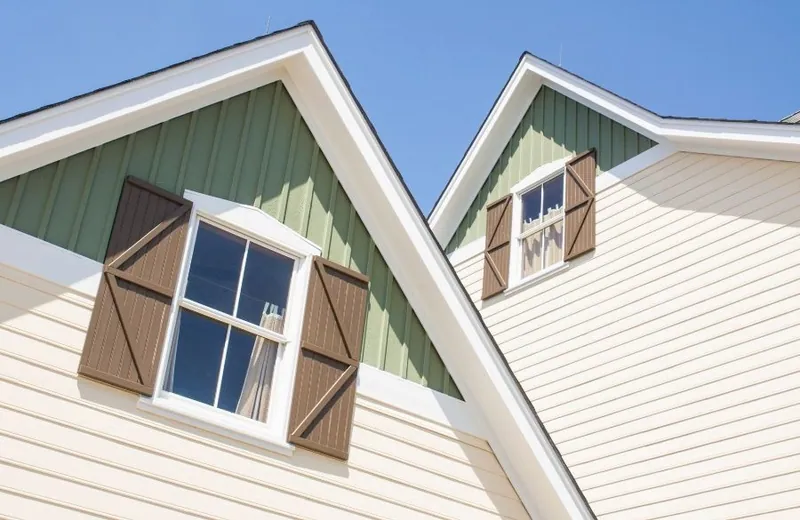
Vertical board and batten installation in fiber cement, engineered materials, or wood, for modern farmhouse, barndominium, and accent-wall designs.

Our approach

Plumb layout, a proper barrier and drainage plane, batten spacing that fits the home's proportions, sealed vertical joints, and trim details that shed water at the base and the window heads.

In Denton, TX

It fits right in on acreage properties around Krum, Sanger, Argyle, and Aubrey, where you see modern farmhouses, shops, and barns. It's also a popular accent on gables in newer Denton-area subdivisions, where the HOA allows it.

Best for

Farmhouse-style renovations, barndominiums, shops and barns, and homeowners who want a design-forward accent elevation.

Simple & Transparent

Our Siding Process, Start to Finish

Siding projects in Denton County go through more steps than most people expect: permits, HOA approvals, and sometimes insurance or historic review. Here's how we keep yours organized and moving.

Inspection and Damage Documentation

  • Walk every elevation and photograph damage, rot, and install defects
  • Probe suspect areas for moisture and check the sheathing where accessible
  • Look for clay-soil movement at corners and joints
  • Flag pre-1978 lead or possible asbestos-cement siding

After a big hail event, we focus first on securing exposed openings so wind-driven rain can't get in while you wait for repairs.

Usually scheduled within a few days of your call; the visit takes about 1–2 hours

Material Selection and Written Estimate

  • Compare vinyl, fiber cement, James Hardie, and board and batten for your home and budget
  • Recommend heat- and fade-resistant colors for sun-exposed walls
  • Provide a written, itemized scope and price
  • Review financing options if you want them

We consider brick and stone coordination, masonry ordinance limits, and how your neighborhood's homes look.

Estimate typically delivered within a few business days

Permits, HOA, and Insurance Coordination

  • Pull building permits where your city requires them
  • Prepare HOA submittals with colors, materials, and profiles
  • Share damage documentation with your insurance adjuster
  • Arrange historic review for Oak-Hickory or downtown properties when required

Denton, Flower Mound, Frisco, and Lewisville all handle permits differently. Under Texas law, we won't waive or absorb your insurance deductible.

Typically 1–4 weeks, depending on city, HOA, and adjuster schedules

Professional Installation or Repair

  • Protect landscaping, windows, and HVAC units
  • Tear off old siding and replace damaged sheathing
  • Install the weather-resistive barrier, flashing, and kick-outs
  • Install siding and trim with proper clearances and fastening

We schedule around spring storm forecasts and work earlier in the day during summer heat for material handling and crew safety.

Repairs often take 1 day; full re-sides usually take 1–2 weeks depending on size and weather

Final Walkthrough and Cleanup

  • Walk the finished exterior with you
  • Sweep for nails with magnets and haul away debris
  • Arrange any required final city inspection
  • Go over care tips such as sprinkler adjustments and caulk checks

We'll point out where irrigation is hitting your new siding so you can redirect heads before lower-course damage starts.

Same day the work is completed
The Denton Siding Pros Difference

Why Denton Homeowners Choose Denton Siding Pros

We're Local, Not Storm Chasers

After every major hail event, out-of-state crews pour into Denton County, knock on doors, and move on before warranty problems show up. We work within a 20-mile radius of Denton, and that's where we stay. We know which subdivisions got hit by which storms, which builders skipped kick-out flashing, and how clay soil behaves east and west of I-35. If something needs attention after the job is done, you're calling a company that's still here.

Bonded and Insured for Your Protection

Texas has no statewide general contractor license, so a lot of the burden falls on you as the homeowner to check who you're hiring. Denton Siding Pros is bonded and insured. If something unexpected happens on your property during the project, you aren't left carrying the risk. We're happy to provide proof of coverage before any work begins. We'd encourage you to ask every contractor you're considering for the same.

Siding Is Our Specialty

We're not a roofing company that does siding on the side. Exterior wall cladding is what we focus on: vinyl, fiber cement, James Hardie, board and batten, and the wood and hardboard on older homes. That focus shows in the details that decide whether siding lasts in North Texas, like flashed butt joints, sealed cut edges, the right clearances above roofs and grade, and fastening that allows for heat expansion and foundation movement.

Hail Claims Documented the Right Way

Insurance adjusters need clear evidence. We photograph and measure damage elevation by elevation, note discontinued colors and profiles, and explain when a partial repair won't match well enough and replacing the full elevation makes more sense. We do it all within Texas rules, which means we never offer to waive or cover your deductible. Honest documentation protects your claim and your home.

We Know Every City's Rules and Every HOA's Paperwork

Denton, Flower Mound, Frisco, Lewisville, Highland Village, Corinth, and Little Elm each handle exterior permits differently, and masonry ordinances limit siding coverage in some of them. HOAs in master-planned communities want color and material approvals before work starts. Historic properties near the Square may need commission review. We prepare the submittals and pull the permits so your project doesn't stall over paperwork.

Clear Pricing and Financing Available

You'll get a written, itemized estimate that explains what we're doing, what material we're using, and why. If we find hidden rot or damaged sheathing after tear-off, we show you before any extra work happens. For larger projects like a full hardboard replacement, financing is available, so you can fix the problem now instead of waiting another season while water keeps getting behind the siding.

Materials Matched to Your Home and Budget

A rental near UNT, a family home in Wellington, and a barndominium outside Krum need different solutions. We'll lay out the honest trade-offs between vinyl, fiber cement, James Hardie, and board and batten, including heat resistance, hail performance, termite exposure, HOA rules, and resale value, so you pick what actually makes sense for your property.

Trusted Locally

Bonded, Insured, and Local to Denton County

20-Mile
Service Radius Around Denton
13
North Texas Communities Served
9
Specialized Siding Services
Bonded & Insured
Protection on Every Project
BondedInsuredFinancing available
Where We Work

Siding Services Across Denton County and North Texas

Based in Denton, we serve homeowners within about 20 miles, from historic homes near the Courthouse Square to master-planned suburbs and rural acreage. Every community here has its own housing stock, permit process, and HOA landscape, and we work with all of them.

Denton and the I-35E Corridor

DentonCorinthLake DallasLewisvilleHighland Village

Southern and Western Suburbs

Flower MoundArgyleRoanokeFrisco

Northern and Eastern Growth Areas

Little ElmAubreyKrumSanger

We serve properties within about a 20-mile radius of Denton. If you're near the edge, Frisco for example, contact us to confirm your address is within our coverage. Not sure if we cover your area? Call (940) 260-8493.

Transparent Pricing

How Much Does Siding Cost in Denton, TX?

Siding costs in Denton County depend on the material, how much wall area you're covering, what's hiding behind the old siding, and local requirements. The ranges below are typical for the North Texas market. Your written estimate will reflect your actual home.

Primary Factor

Material Choice

Material is the biggest variable. Standard vinyl is the most affordable installed option. Heavier, heat-resistant vinyl costs more but handles Denton's 100°F summers better. Fiber cement and James Hardie typically run noticeably higher per square foot because of material cost and more labor-intensive installation, but they resist hail, termites, and heat far better. Board and batten pricing depends heavily on whether it's fiber cement, engineered material, or real wood.

Primary Factor

Wall Area and Home Layout

Siding is priced by the 'square' (100 square feet). On many Denton-area homes, brick covers the front and siding covers only the gables, second story, and rear walls, which can cut the total a lot. Two-story walls, steep gables, dormers, and chimney chases need staging and more cutting, so they raise labor costs compared with a single-story ranch.

Major Factor

Hidden Damage Behind the Siding

Tearing off 30-year-old hardboard or builder-installed Hardie with missing flashing often turns up rotted sheathing, termite damage, or wet framing. Replacing damaged OSB or plywood adds cost but it's essential. Otherwise new siding just hides the problem. We show you anything we find before doing additional work.

Moderate Factor

Tear-Off, Disposal, and Special Handling

Removing and hauling away old siding is part of most replacements. Costs go up when there are layers, like vinyl over aluminum over original wood on older Denton homes, or when pre-1978 lead paint requires lead-safe practices. Suspected asbestos-cement siding may need testing and licensed abatement, which is priced separately.

Moderate Factor

Permits, HOA, and Design Requirements

Permit fees vary by city. HOA-required colors or profiles, historic-district matching of wood siding, and coordinating siding and trim with existing brick or stone can all affect material choice and price. Insurance-covered storm work may also involve replacing full elevations to get a match.

Typical projectDetailsEstimated range
Hail repair on one elevationReplace cracked vinyl or chipped fiber cement on a single wall of a 1-story home in north Denton or Little Elm$800 – $3,500
Hardie gables and upper walls on a brick-front homeReplace or install fiber cement on gables, second-story walls, and chimney chase, roughly 800–1,200 sq ft, in Frisco, Argyle, or Roanoke$9,000 – $20,000
Full vinyl re-side on a hardboard homeTear off failing hardboard and install heat-resistant vinyl on a ~1,800 sq ft single-story home in Corinth or Lake Dallas$12,000 – $22,000
Full hardboard-to-James Hardie replacementTwo-story 1990s home in Flower Mound or Highland Village, ~2,500 sq ft of wall, including sheathing repairs and paint$28,000 – $55,000

Financing is available for qualified homeowners. It's a practical way to handle a full re-side now instead of letting failing hardboard or storm damage keep letting water in. New siding protects the structure behind it and boosts curb appeal in one of the hottest housing markets in Texas. Durable materials matched to North Texas hail and heat also mean fewer repair bills down the road.

Questions & Answers

Siding Questions Denton Homeowners Ask

How much does it cost to replace siding on a house in Denton?

Most full siding replacements in the Denton area land somewhere between about $12,000 and $55,000. Where yours falls depends on material, wall area, and what's behind the old siding. A single-story home re-sided in quality vinyl usually sits at the lower end. A two-story home switching from hardboard to James Hardie, with sheathing repairs and paint, usually sits at the higher end. Brick-front homes where siding only covers gables and rear walls often cost less than you'd expect. Smaller hail repairs typically run from several hundred to a few thousand dollars. We give you a written, itemized estimate after inspecting your home, and financing is available.

Do I need a permit to replace siding in Denton or nearby cities?

Usually, yes. The City of Denton generally requires a building permit for residential re-siding or wall covering replacement. Flower Mound, Lewisville, Frisco, Highland Village, Corinth, and Little Elm also regulate exterior work, though thresholds differ, so we confirm the requirements for your specific address. Unincorporated Denton County typically has fewer requirements. Homes in the Oak-Hickory Historic District or near the downtown Square may need Historic Landmark Commission or staff review, and HOAs in most master-planned communities require color and material approval. We handle the permits and help prepare HOA submittals.

How long does a siding project take?

Most repairs take a single day. A full re-side on a typical Denton-area home usually takes about one to two weeks of on-site work, depending on size, number of stories, hidden sheathing damage, and weather. The bigger timing factor is often what happens before work starts. Permits, HOA approvals, and insurance adjuster visits can add one to four weeks. After a major hail storm, demand spikes across Denton County, so getting on the schedule early helps. We'll give you a realistic timeline in your estimate and keep you updated if storms or approvals change it.

Will my insurance cover hail damage to my siding?

Many homeowner policies cover sudden hail and wind damage, but coverage depends on your policy, deductible, and the documented damage. We inspect every elevation, photograph and measure the damage, and share that documentation with your adjuster. If your siding color or profile has been discontinued and a repair won't match, we'll explain why replacing the full elevation may be justified. One important note: Texas law restricts contractors from waiving or absorbing insurance deductibles on storm claims. Be cautious with anyone who offers to 'cover your deductible.' It's a common storm-chaser tactic.

Should I choose vinyl, fiber cement, or James Hardie siding in North Texas?

It depends on your budget, your HOA, and your plans for the home. Quality vinyl costs the least and needs no painting, but thin panels can warp in Denton's 100°F heat and crack in large hail, so we recommend heavier, heat-resistant products and lighter colors on sun-facing walls. Fiber cement, including James Hardie, costs more but resists hail impacts, termites, and heat much better and holds paint well. It's a popular choice in Flower Mound, Frisco, and Argyle for resale value. Board and batten suits farmhouse and acreage properties. We'll walk you through the honest trade-offs.

How do I know if my hardboard siding needs to be replaced?

Press on the lower edges of the boards, especially near sprinklers and on north-facing walls. If they're swollen, soft, flaking, or show the waffle texture through the paint, moisture has gotten into the wood fibers, and that can't be reversed. A few damaged boards can be replaced individually. But if you're seeing swelling across several walls, recurring paint failure, or fungus, you're looking at the end-of-life failure common in 1980s–90s homes in Lewisville, Corinth, Highland Village, and Lake Dallas. At that point full replacement usually costs less over time than repeated repairs.

When should I call a siding contractor instead of waiting?

Call right away if siding is missing, punctured, or cracked after a storm, because spring rain in North Texas comes in hard and sideways and can soak the sheathing within days. You should also act quickly if you notice interior water stains below gables, soft or swollen boards, termite mud tubes, or gaps opening at corners. Those signs often mean hidden damage or foundation movement. If your newer home is near the end of its builder warranty, get an inspection before coverage ends. Smaller cosmetic issues like fading can wait until it's convenient.

How can I prevent siding damage on my Denton home?

Start with your sprinklers. Adjust the heads so they don't spray the lower courses, since daily soaking is a leading cause of rot and swelling on hardboard and wood. Keep soil and mulch several inches below the siding to discourage termites. Check caulk at butt joints and trim every spring and fall, because North Texas sun breaks it down quickly. Keep gutters clear so they don't overflow onto the walls. Keep soil moisture around the foundation fairly consistent during drought to limit clay movement. And inspect your siding after every significant hail storm, even if damage isn't obvious from the ground.

Find Us

Serving Denton, TX & Nearby

301 N Locust St, Denton, TX, 76201

Ready When You Are

Protect Your Home Before the Next Hail Season

Whether it's storm damage, swelling hardboard, or a builder install that's starting to leak, the sooner you know what's going on behind your siding, the less it costs to fix. Let's take a look.

  • A thorough, elevation-by-elevation siding inspection
  • Photo documentation you can use for insurance claims
  • Honest material recommendations for North Texas hail and heat
  • A written, itemized estimate with no surprise add-ons
  • Permit and HOA coordination handled for you
  • A bonded and insured local crew
  • Financing available for qualified homeowners

Serving Denton, Corinth, Highland Village, Flower Mound, Argyle, Lewisville, Krum, Aubrey, Little Elm, Sanger, Lake Dallas, Roanoke, and Frisco within about 20 miles of Denton.

Storm just hit? If siding is torn off or punctured and your wall is exposed, contact us so we can help secure the opening before the next round of rain.

Bonded · Insured

Denton Siding Pros Free estimates across Denton, TX